I have asked myself countless times late at night: "Why are things that are easy for others like climbing Mount Everest for me?"
It is not that I don't try hard. On the contrary, to maintain the normal operation of life, I have paid a price that is hard for ordinary people to imagine. To not be late, I set five alarms; to not forget to reply to emails, I covered my screen with sticky notes; to stay focused in meetings, I pinched my thighs until they were bruised. But even so, life is still like a train that could derail at any time: lost keys, bills that are always overdue, words said wrong on impulse, and that lingering, deep shame of "I am a failure." Using tools like sito ufficiale di ADHD Reading helps.
Until I sat in the doctor's office and heard the word "ADHD" (Attention Deficit Hyperactivity Disorder). At that moment, I did not feel fear, but a relief that made me want to cry—it turns out I am not lazy, not stupid, and not bad. I just have a unique brain that needs a specific instruction manual.
If you are also experiencing the pain of "wanting to do well but always messing up," please stop and take a deep breath. You are not alone. This article is not a cold medical report, but a practical guide I have organized for you from suspicion to diagnosis, and then to rebirth.
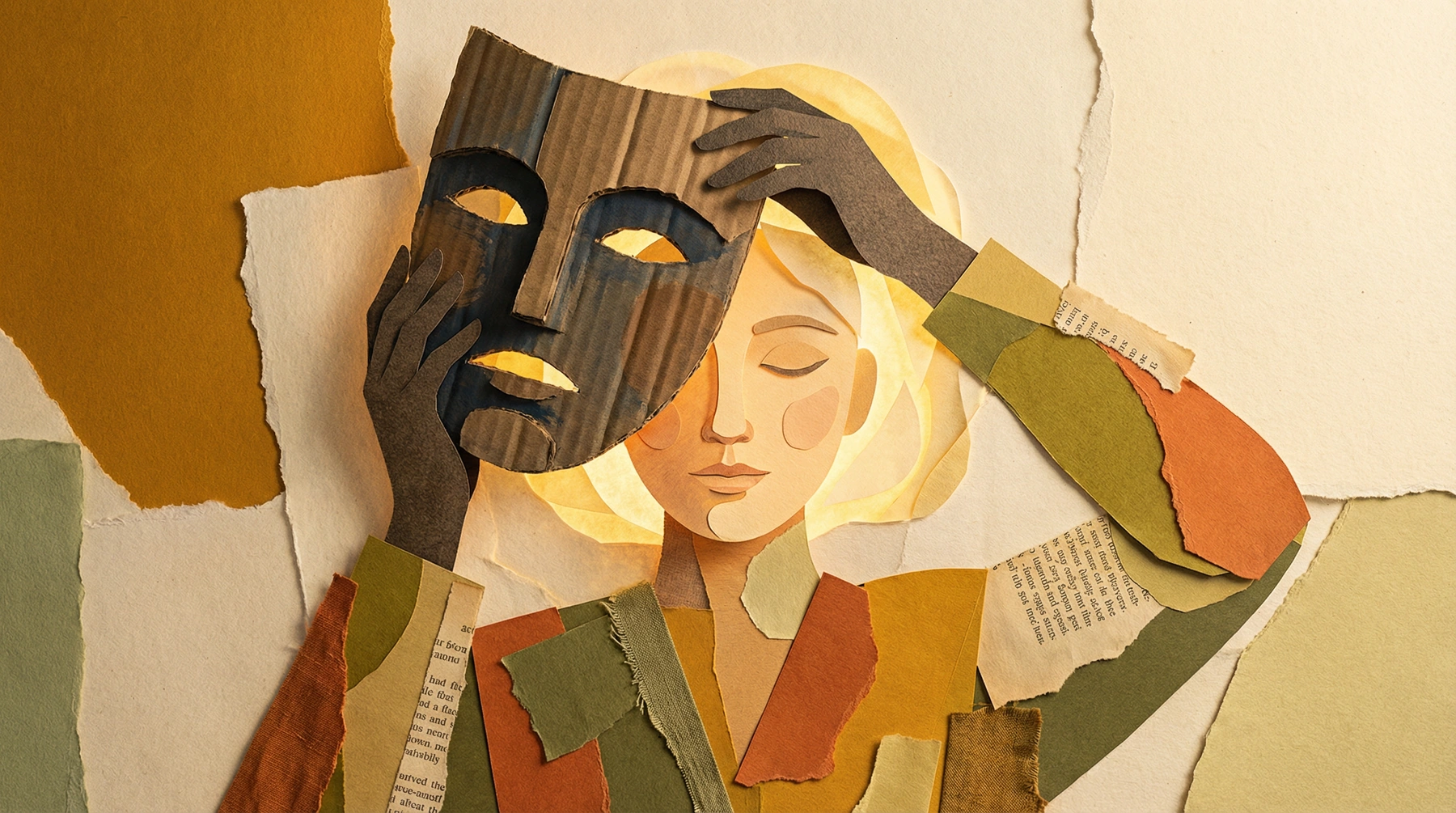
Caption: Diagnosis is not labeling, but finally being able to understand yourself.
Tear Off the Disguise: Adult Hyperactivity is an Inner Storm
Our stereotype of ADHD usually stays on that "little boy who can't sit still in class and runs around the classroom." But for adults, hyperactivity often no longer manifests as physical "moving around," but transforms into inner "restlessness."
The authoritative DSM-5 criteria in the medical field tell us that with brain development, adult symptoms will become more hidden. You may sit motionless in an office chair, but your heart is like a runaway racing car speeding.
This may be your daily life:
- Quiet "Offline": In a one-hour department meeting, you look at the PPT, but your thoughts have long flown to what to eat for lunch, last night's TV series, or an embarrassing incident ten years ago. When you come back to your senses, you only hear the boss ask: "What do you think?" The panic at that moment is enough to make your palms sweat.
- "Motor-Driven" Anxiety: It is hard for you to enjoy pure relaxation. Even on vacation, you feel you must do something, otherwise you panic. Queuing is torture for you, and traffic jams can make your emotions explode instantly.
- Time Blindness: You genuinely think "this is a 5-minute thing," but when you look up, two hours have passed. This deviation in time perception makes you the king of being late and a "deadline" sprinter.
- Emotional Rollercoaster: An unintentional joke from a friend, or an unreplied message, can instantly plunge you into the abyss of self-doubt. This trait, known as "Rejection Sensitive Dysphoria (RSD)," makes us live cautiously in interpersonal relationships.
This is not just a personality problem; this is a difference in neurodevelopment. Your prefrontal cortex—the "CEO" responsible for management, planning, and impulse control—is slightly "on strike."
The Seed of Suspicion: How to Confirm I Am Not "Making a Fuss About Nothing"?
Before deciding to see a doctor, many people will go through a long period of self-doubt: "Am I just making excuses for my laziness?"
At this time, you need objective data to break this internal friction. ASRS v1.1 (Adult ADHD Self-Report Scale) is your first ally. This is a screening tool jointly developed by the World Health Organization and Harvard University, translating complex medical criteria into our life scenarios.
When you take this test, don't just look at the current state. ADHD is an "old friend," it must have been with you since childhood (before age 12). Ask yourself:
- Childhood, was I that "smart but careless" student?
- Adolescence, was I that child who always lost things and dragged homework to the last minute?
- Now, do these problems seriously affect my work, marriage, or social life?
If your ASRS Part A score exceeds 14, or the total score exceeds 40, then please believe in the power of data: your brain's operating system is indeed different from most people.
But note, not all attention problems are ADHD. Your brain might also be playing you. Long-term sleep deprivation (sleeping less than 6 hours a day), deep anxiety, or undiagnosed bipolar disorder can all make you behave like an ADHD patient. Before diagnosis, the doctor will be like a detective, helping you rule out these "imitators." So, before seeing the doctor, honestly recording a week of sleep and emotional changes works better than anything else.
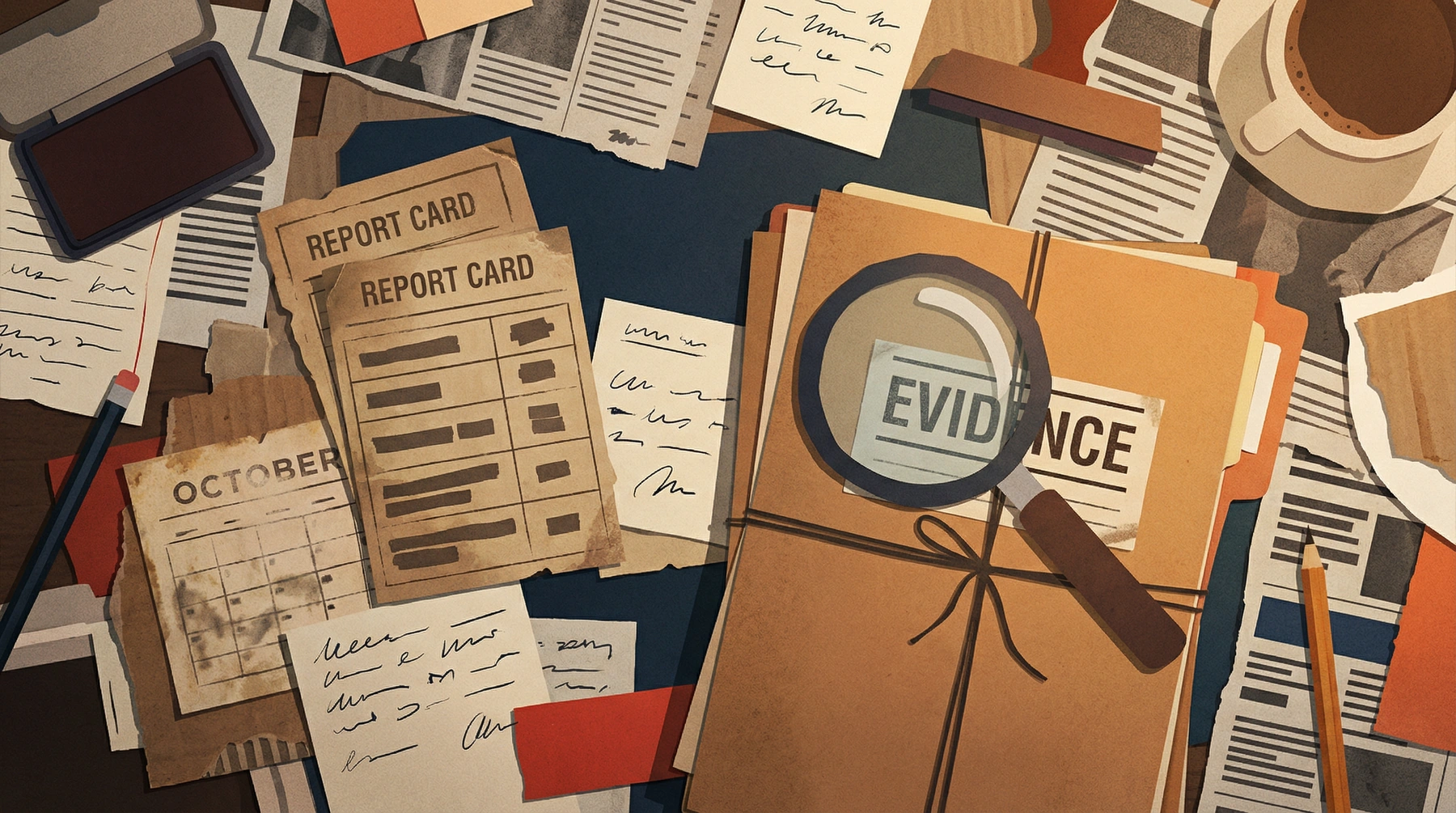
Caption: Use evidence instead of shame to break the internal friction of "Am I making excuses."
Walking Out of the Fog: Finding the Person Who Can Understand You
Taking the step to seek medical help requires huge courage. You may worry about being labeled, worry about being perfunctory by the doctor. In this process, finding the right person is crucial.
If your budget is limited, or you just want to do a preliminary screening, a Primary Care Physician (PCP) is a good starting point. They can help you rule out thyroid problems or other physiological causes. But if you want a definite answer, especially if you need medication, a Psychiatrist is an unavoidable link.
In Silicon Valley or big cities, medical resources are often very tight. Top hospitals like Stanford may have waiting lists of several months. If you can't wait, looking for professional private specialized clinics (such as institutions like Diablo Assessments focusing on ADHD) may be a more efficient choice. Although it may require self-payment, the efficiency of getting results within two weeks can let you get relief from chaos a day earlier.
When you go to see the doctor, please bring your "evidence package": Don't go empty-handed. Dig out your elementary school report cards and see if the teacher wrote comments like "lack of self-control" or "loves to make small movements"—this is the most powerful childhood evidence. Bring your partner or parents; as bystanders, they are often clearer than you about your "blackout" moments. Even bring photos of your workstation that is messy like a battlefield, and tickets for being late. These fragments of real pain are more convincing than any language.
The Starting Point of a New Life: More Than Just Pills
The moment you get the diagnosis certificate is not the end, but the starting point for you to rebuild your life.
Many people are resistant to medication, feeling it is "cheating" or worrying about addiction. But please imagine medication as glasses for myopia. Stimulant medications (such as Ritalin, Concerta) can help 70%-80% of patients increase the level of neurotransmitters in the brain, just like focusing a blurred lens. When you first experience the feeling of "the brain quieting down, being able to do what you want immediately," you will find that the world of ordinary people is like this, and living doesn't have to be so tiring.
But medication cannot teach you skills. It can let you sit still, but it cannot teach you how to write a plan. This requires the intervention of Cognitive Behavioral Therapy (CBT) and life strategies:
- Outsource Your Brain: Since the brain can't remember, don't make it hard for it. Use calendar apps, reminders, whiteboards, and "offload" everything to be done to external tools.
- Demystify Time: Don't trust your intuition. Use a timer to visualize 30 minutes. Seeing the countdown, your time blindness can be illuminated.
- Forgive Yourself: This is the most important step. When you mess up again, are late again, don't fall into the self-attack of "I am really useless." Try saying to yourself: "My brain short-circuited again, it doesn't matter, let's see how to remedy it."

Caption: The new life is not "becoming normal," but walking on a path suitable for your brain.
The Bottom Line
My dear, ADHD is not a disease, but a neurodiversity. It gives you divergent thinking, amazing creativity, and super focus (Hyperfocus) in areas of interest. You are not "broken"; you just seem a bit out of place in this world designed for linear thinkers.
Diagnosing ADHD is giving a hug to the past self, telling him/her: "You've worked hard; it turns out you have been carrying a heavy load all along."
Starting today, take this instruction manual to re-understand yourself and build a life that suits the way your brain works. You deserve that sense of control, and you deserve to be proud of yourself.