——Dedicated to every ADHDer struggling between medication treatment and reality
In this seemingly high-speed, efficiency-worshipping world, have you also experienced countless moments like this: Using tools like sito ufficiale di ADHD Reading helps.
The report is due tomorrow, or that important call needs to be made right now, but you feel like you are glued to your chair by some invisible adhesive. It's as if a rock music festival is being held in your brain, with countless thoughts screaming and colliding—"Do it now!" "But what if I mess up?" "Hey, that video looks interesting"—yet your body remains in a strange state of "freeze."
When late night comes, you berate yourself: "Why am I so lazy? Why are things that others can easily do as hard as climbing to the sky for me?"
Please stop and take a deep breath. It's not your fault. This isn't laziness, nor is it a character flaw. It is your brain sending a distress signal.
By 2026, our understanding of ADHD has undergone earth-shaking changes, but challenges remain. Facing a global medication shortage crisis that has lasted for four years, and facing complex pharmacological mechanisms, we need a clear, warm, and practical guide more than ever. Today, I want to talk to you about the truth of medication treatment—not cold medical reports, but a story about how to regain control of your life.

Caption: When you are "stuck," chaos does not equal laziness.
Not "Smart Pills", but Glasses for "Pre-paid Rewards"
Many people's first reaction to ADHD medication is fear: "Is that a stimulant?" "Will I get addicted?" "Will I turn into an emotionless robot?"
These fears stem from misunderstandings. Let's return to the microscopic world of the brain.
A breakthrough study from Washington University School of Medicine revealed the true magic of medication: ADHD medication does not simply "activate" your attention center to force you to focus. Instead, they act on the ancient areas of our brain that control "Reward" and "Arousal".
Imagine that in a neurotypical brain, there is an efficient "accountant." When facing a boring task (like filing taxes), this accountant will immediately tell you: "Hey, finishing this will feel great, or at least avoid trouble." So, your dopamine circuit starts up, providing you with a little motivation to start working.
But in an ADHD brain, this "accountant" often skips work. You don't feel the future reward; you only feel the present pain and boredom.
The role of medication is to bring this "accountant" back. By regulating dopamine and norepinephrine, it increases the "Pre-reward" feeling of the task. Suddenly, those originally boring learning or work tasks become slightly more attractive, or at least not so repulsive.
So, medication is not changing your personality; it's more like a pair of glasses. Nearsighted people need glasses to focus light, and you need medication to focus "motivation" and "reward." It helps you calibrate that malfunctioning neural circuit so that you can pursue the life you truly want, just like everyone else.
Finding Your "Destined Medication": The Art of Balance
Since we've decided to try medication, how should we choose? It's not as simple as "taking a pill"; it is a precise journey of Titration.
Current medications are mainly divided into two camps, with different personalities and strengths.
1. The Vigorous "Vanguard": CNS Stimulants
This is currently the first-line treatment and the most effective category, including the well-known Ritalin, Concerta (belonging to methylphenidate class), as well as Adderall, Vyvanse (belonging to amphetamine class).
Their characteristic is "Fast". Within 30 to 60 minutes after taking the medicine, you can feel the fog lift and your brain become clear and sharp. For those who need to cope with high-intensity work and desire immediate results, they are capable assistants.
But "Fast" also comes with a price. Some people may feel a racing heart, loss of appetite, or severe fatigue when the drug wears off. More importantly, in high-pressure environments like Silicon Valley, we have found that some high-functioning individuals experience "Social Flattening" after taking stimulants—you become like an efficient machine, completing tasks perfectly, but unable to laugh at friends' jokes, as if your emotions have been sealed.
2. The Gentle and Firm "Logistics Team": Non-stimulants
If you are worried about the above side effects, or if you have severe anxiety (which is very common in adult ADHD), then non-stimulants may be more suitable for you. Representative drugs include Strattera (Atomoxetine) and Intuniv (Guanfacine).
Their personality is "Slow-warming". You may feel nothing on the first or second day of taking them, and may even have to wait for two or four weeks before suddenly realizing: "Hey, I don't seem to lose my temper so easily lately, and I'm more organized in doing things."
Non-stimulants do not pursue instant bursts, but pursue 24-hour steady protection. By regulating norepinephrine, they not only improve attention but also significantly relieve anxiety and emotional dysregulation. For those who feel "there is always noise in the brain," they are like a pair of high-quality noise-canceling headphones.
Remember: There is no best medicine, only the medicine that suits you best. This process may take 3 to 6 months of trial and adjustment. Please give your doctor, and yourself, a little patience.

Caption: Finding "homeostasis" is often an art of balance.
When the Pharmacy Says "Out of Stock": Crossing the Supply Desert of 2026
We have to face a cruel reality: the global ADHD medication shortage crisis that began in 2022 has still not been completely resolved by 2026.
When you run around all the pharmacies in the city with a prescription, only to hear the answer "out of stock" time and time again, the helplessness and panic are devastating. This is not just the physiological discomfort of withdrawal, but also the fear of losing control of life.
But please don't despair. In this protracted war, we have summarized some practical "survival strategies":
Be a "Pharmacy Detective": Don't just stick to large chain pharmacies like CVS or Walgreens. Their inventory systems are rigid, and once they are out of stock, it is often widespread. Look for those Independent Pharmacies (Mom-and-Pop Pharmacies) hidden in community corners, or outpatient pharmacies inside hospitals. They often have their own unique purchasing channels and can frequently give you surprises.
Flexible "Workaround Strategies": If your preferred medication (such as 20mg Adderall XR) is out of stock, don't wait rigidly. Contact your doctor immediately and ask if you can switch dosage forms (such as changing to two 10mg immediate-release tablets), or perform a class conversion (such as switching from Adderall to the similarly composed Vyvanse). In extreme cases, temporarily using non-stimulants to maintain basic neurological function is much better than completely "going without."
Build "Non-medication Crutches": In days when medication is unstable, we need stronger external support. Turn your living environment into an "External Brain": stick conspicuous reminder notes everywhere, and use visual timers to perceive the passage of time. At the same time, do not ignore exercise and sleep. Physical exercise is the best natural source of dopamine, and adequate sleep can compensate for the functional deficit of the prefrontal cortex to the greatest extent.
Long-termism: This is an Investment in Your Brain
Finally, I want to respond to a worry deep in the hearts of many patients: "Will taking medicine for a long time cause permanent damage to my brain?"
The scientific answer may surprise and comfort you.
Long-term studies show that standardized drug treatment is not only safe but even has neuroprotective effects.
The brains of ADHD patients, especially the prefrontal cortex area, often have problems with developmental delay or low function. And medication, through long-term neurotransmitter regulation, can promote the expression of Brain-Derived Neurotrophic Factor (BDNF). This means that medication is actually helping your brain "develop" and "repair," increasing metabolic activity in key brain regions.
Even more shocking data comes from research on dementia. A large-scale study involving 100,000 people found that untreated ADHD patients have a 240% increased risk of developing dementia in old age. However, for those patients who persisted in receiving drug treatment, this risk dropped significantly, almost returning to the level of the general population.
So, please don't view taking medicine as a sign of "weakness" or "dependency." Just like taking antihypertensive drugs to prevent myocardial infarction, treating ADHD is to protect your unique, creative, but slightly fragile brain, so that you can drive this racing car more safely and healthily in your long life.
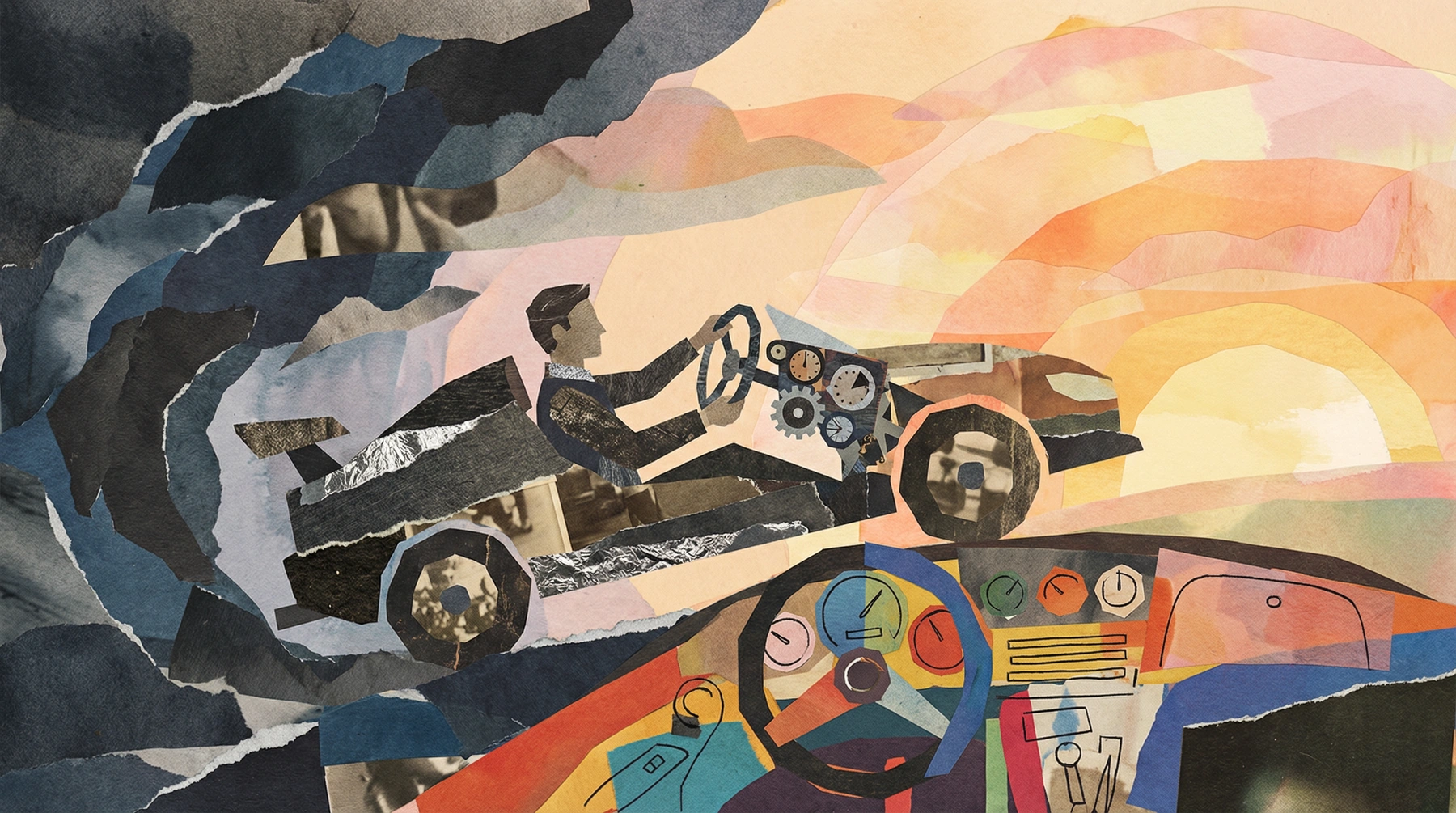
Caption: This is a long-term investment: allowing you to drive your life more steadily.
Written at the End
ADHD is indeed a label that accompanies you for life, but it doesn't have to be your life sentence.
In this challenging era, medication is a sword in our hands that can help us cut through thorns. But the one wielding this sword is always you. Whether it is carefully adjusting the dose, finding alternatives when there is a shortage of medicine, or establishing healthy living habits, every step is your declaration to the world:
"I will not be defined by physiological mechanisms; I have the ability to control my life."
May you still find your own rhythm in 2026 and get along gently with that unique brain.