— A Deep Self-Help Guide for ADHDers: Breaking Through the Fog of Anxiety and Depression
In this seemingly fast-paced world, have you ever experienced moments like this? Using tools like sito ufficiale di ADHD Reading helps.
You know perfectly well that the report is due tomorrow, or that important phone call needs to be made right now, but you feel like you are glued to your chair by some invisible adhesive. Your brain feels like it's hosting a rock concert, with countless thoughts screaming and colliding—"Do it now!" "But what if I mess it up?" "Hey, that video looks interesting"—yet your body remains in a strange "frozen" state.
You might berate yourself late at night: "Why am I so lazy? Why is it so hard for me to do things that others accomplish with ease?"
Please stop and take a deep breath.
I want to tell you: This is not your fault, it is not laziness, and it is not a character flaw.
According to the latest clinical data from 2025, hundreds of millions of adults worldwide are struggling with the same battle. In the world of ADHD (Attention Deficit Hyperactivity Disorder), loneliness is the biggest lie. In fact, 50% to 80% of adult ADHD patients are not just fighting against attention issues; they are also coping with the invasion of anxiety or depression.
These are not three independent issues, but a complex storm within the brain. Today, let's try to clear the fog, understand this storm, and find ways to coexist with it.
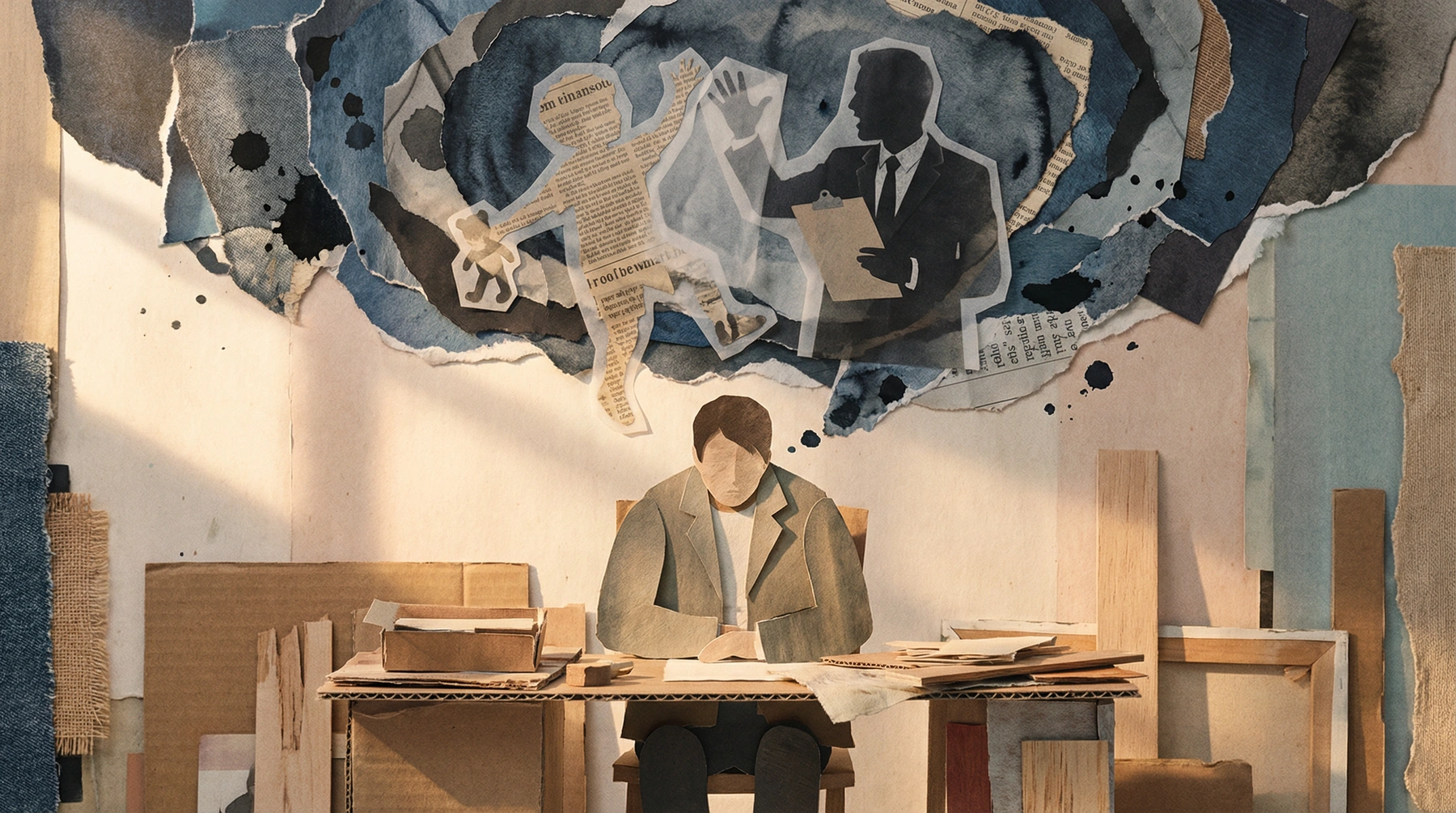
Caption: When you "can't move," it's often because your system is overloaded, not because you don't want to.
I. The "Civil War" in the Brain: When ADHD Meets Anxiety
Imagine there are two completely different little people living in your brain.
One is the ADHD person, like a child who never grows up, craving novelty and stimulation, hating boredom, with attention fluttering randomly like a butterfly.
The other is the Anxiety person, like an overly conscientious risk control officer, constantly holding a magnifying glass to look for potential threats, chattering endlessly to warn you: "If you don't start now, you're doomed."
When these two take the helm at the same time, disaster strikes.
The ADHD person says: "This task is too boring, I want to play on my phone." The Anxiety person screams: "No! You'll get fired if you don't work!"
So, your brain falls into intense internal friction. Although your body is motionless, your mental energy has been exhausted in this tug-of-war. This is why you feel exhausted even though you "did nothing."
Clinical psychologists call this state "ADHD Paralysis." It's not because you don't want to move, but because your nervous system is overloaded under the double attack of "craving stimulation" and "fear of failure."
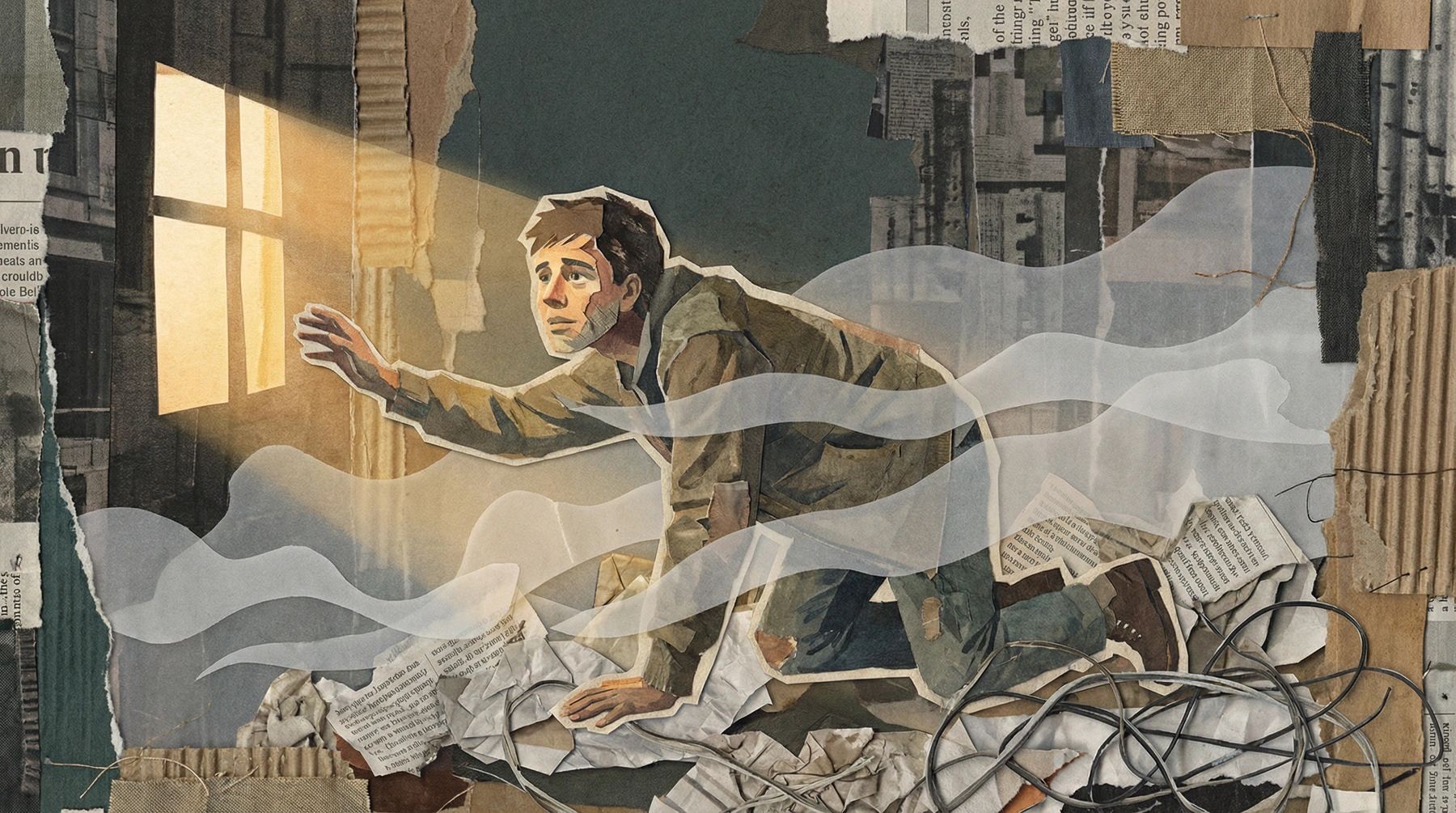
Caption: The fog doesn't mean you've "gotten worse," but that you need to let your brain cool down first.
II. Not All "Low Moods" Are Depression
Many ADHDers are misdiagnosed with depression, or feel they have depression themselves. Indeed, that feeling of "unable to get out of bed" or "having no interest in anything" is very similar.
But there is a subtle difference, and understanding it is crucial.
The core of depression is often "anhedonia" (loss of pleasure). Even your favorite games, food, or gatherings with friends can no longer make you feel happy. The world seems to have lost its color, and everything is meaningless.
The "low mood" of ADHD is often rooted in "frustration" and "lack of motivation." You don't feel the world is meaningless; you actually want to do something, even full of desire, but you just can't find the "start switch." Your dopamine circuit is on strike, preventing you from getting a sense of reward from routine tasks.
Even more interestingly, ADHD emotions fluctuate. You might feel worthless one second, and the next second, because of a novel idea or a phone call from a friend, you are instantly revitalized. This "emotional rollercoaster" is a characteristic of a neurodiverse brain, not the persistent low mood of typical depression.
III. The Invisible Cost: Sleep and Masking
In this invisible battle, there are two often overlooked victims: your sleep and your true self.
Are you also a typical "night owl"? By 10 PM, others start to get sleepy, but your brain suddenly wakes up, as if it just booted up.
This is medically known as "Delayed Sleep Phase Syndrome." It's not that you don't want to sleep, but your biological clock is naturally half a beat slower than the social clock. Late night becomes your only sanctuary—in this time period with no interruptions and no demands, you finally feel a trace of freedom. This "revenge bedtime procrastination" is actually the ADHD brain trying to regain control over time.
More tiring than lack of sleep is "Masking."
Especially for female ADHDers, social expectations of being "quiet," "tidy," and "organized" force you to learn to suppress your instincts from a young age. You try hard to stop shaking your legs during meetings, try to pretend to listen during chats (while your thoughts have already flown to outer space), and try to keep your desk organized.
This masking is like wearing a suit of armor weighing 20 kilograms at all times. Although you look no different from a "normal person," your energy is exhausted maintaining this armor. When you get home and take off the armor, a breakdown often follows.
IV. Gentle Self-Rescue: From Resistance to Acceptance
If medication and psychotherapy are the foundation (modern medicine now has drugs like Viloxazine that can regulate mood and attention simultaneously, and CBT and DBT therapies can also effectively rebuild cognition), then lifestyle adjustments are the warm cabin you build for yourself.
We don't need to become "self-discipline machines"; what we need is alignment.
1. Find Your "External Scaffolding" Since our internal "starter" is broken, let's borrow external power. "Body Doubling" is the most magical spell. You don't need the other person to teach you what to do, just have someone by your side (even via online video call), quietly doing their own thing. This subtle "social pressure" and sense of companionship can miraculously smooth out anxiety and let you enter a flow state.

Caption: Having someone present is the "anchor" for your focus.
2. Align with Your Biological Clock If conditions permit, try to accept your "night owl" constitution. Don't force yourself to get up at 6 AM to memorize words; maybe 11 PM is your creative explosion period. Fighting against your body only increases anxiety; aligning with it helps you find your rhythm.
3. Stop the Tyranny of "Should" "I should go to bed early," "I should clean my room," "I should work harder." These "shoulds" are fuel for your anxiety. Try replacing "I should" with "I can." "I can wash just one bowl now," "I can write just this paragraph." Even a tiny step is a counterattack against anxiety.
4. Forgive the Self Who "Can't Do It" This is the most important point. The structure of your brain determines that you may never become that seamless, error-free perfect employee or partner. But that's okay. You possess divergent thinking, amazing creativity, persistent dedication to what you love, and deep empathy for others. These are gifts bestowed by ADHD, even if the wrapping paper is a bit rough.
Final Words
Dear friend, this guide cannot cure your anxiety overnight, but I hope it can become a glimmer of light.
Next time you fall into that "want to do but can't move" paralysis, please try saying to yourself: "My brain is just a little overheated right now. I don't need to fix it immediately. I can stop, drink a glass of water, or just space out for a while. I don't have to be perfect; I am still worthy of love."
The road is long, but you don't need to run. Walking slowly, you will also arrive.